Simplifying Local Government
Help shape the future of your local government
This is not a binding poll. Community feedback will help inform Council proposals, but final decisions sit with Central Government.
Change is coming to how local government works.
The Government is looking at changes to how local government works in New Zealand, with the aim of making it simpler, more efficient and easier for people to understand.
This could affect how local decisions are made, how services are delivered, and how local communities are represented, and will significantly reduce the number of councils in New Zealand.
Under the proposed changes, regional councils won’t exist after 2028, and all district councils would eventually become unitary authorities - one council doing the work currently done by both district and regional councils.
District councils generally deliver local services such as roads, rubbish collection, parks, libraries, water services and local planning, while regional councils focus on environmental management, like water quality and pest control, and public transport.
To carry out these functions effectively, it is likely that some councils will need to join together.
Our council has agreed to be part of the Government’s Head Start pathway so that we can have a say in developing our future, instead of having it done to us later.
Under this pathway, district councils can work together to develop outline proposals for new unitary authorities. These proposals can cover all or part of a region and may include the creation of one, or a small number of, new unitary authorities.
Councils only have until 9 August 2026 to submit an outline proposal.
Since the Government’s announcement on 5 May, we've been talking with other councils across the region, and it’s important we have your views as part of these conversations, while we work through what comes next.
A community survey was open from Friday 12 June to Sunday 12 July 2026. You can view a summary of the results here.
-
Community survey results
Share Community survey results on Facebook Share Community survey results on X (formerly Twitter) Share Community survey results on Linkedin Email Community survey results link633 people complete our Simplifying Local Government community survey - thank you!
Over the last month we’ve asked our community to share their views on the future of Local Government in Taranaki. We wanted to know what matters most to our community, what the opportunities and concerns for reform are, and whether there was interest in Taranaki having one unitary council or two unitary councils.
We’re grateful to everyone who took the time to complete this survey, and to the people who came to our Public Forum to speak directly with Elected Members on the topic.
Your feedback is helping shape Stratford’s voice in one of the most significant local government reform programmes we have seen in decades.
Please know that there will be more in-depth consultation as part of the next phase of this reform programme as we work through the detail of a proposal.
The next key milestone in the journey is the submission of an outline proposal to Government by 9 August 2026.
We will continue to keep you informed as this work progresses.
Survey responses
The responses on our survey showed a clear preference for retaining strong local representation and protecting Stratford’s identity, regardless of the final local government structure.
While respondents acknowledged potential benefits from reform, particularly shared services, reduced duplication and simpler governance, these benefits were outweighed by concerns about:
• Loss of local voice and decision-making.
• Stratford's needs being overshadowed by a larger urban centre.
• Rural communities being subject to urban-focused policies.
• Stratford ratepayers subsidising larger councils.
• Loss of Stratford's distinct identity, services and community assets.
The strongest sentiment was that Stratford and South Taranaki have more in common with each other than with New Plymouth, due to their rural economies, smaller populations and similar community needs.
A recurring theme was that people are not opposed to collaboration or shared services, but they want safeguards that protect Stratford's voice, funding, identity and local decision-making.
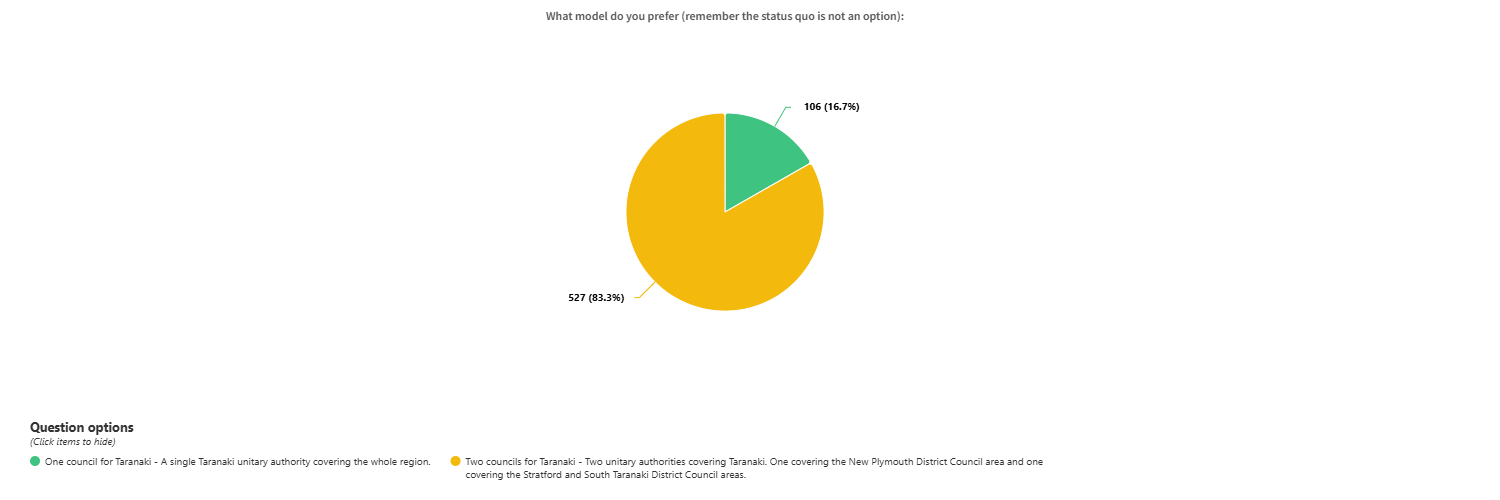
One or two councils?
- 83.3% was in favour of two unitary authorities for Taranaki (a Stratford and South Taranaki model)
- 16.7% was in favour of one unitary authority for Taranaki
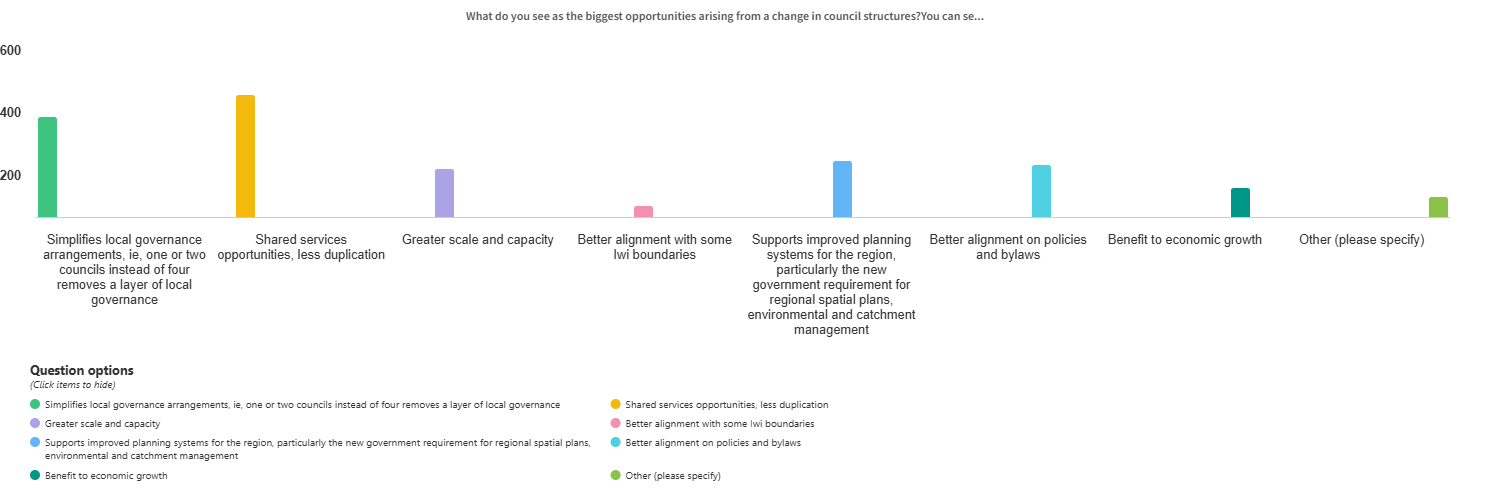
Biggest opportunities?
- 62.5% selected shared services
- 51.4% selected simplified governance
- 28.9% selected supports improves planning systems for the region
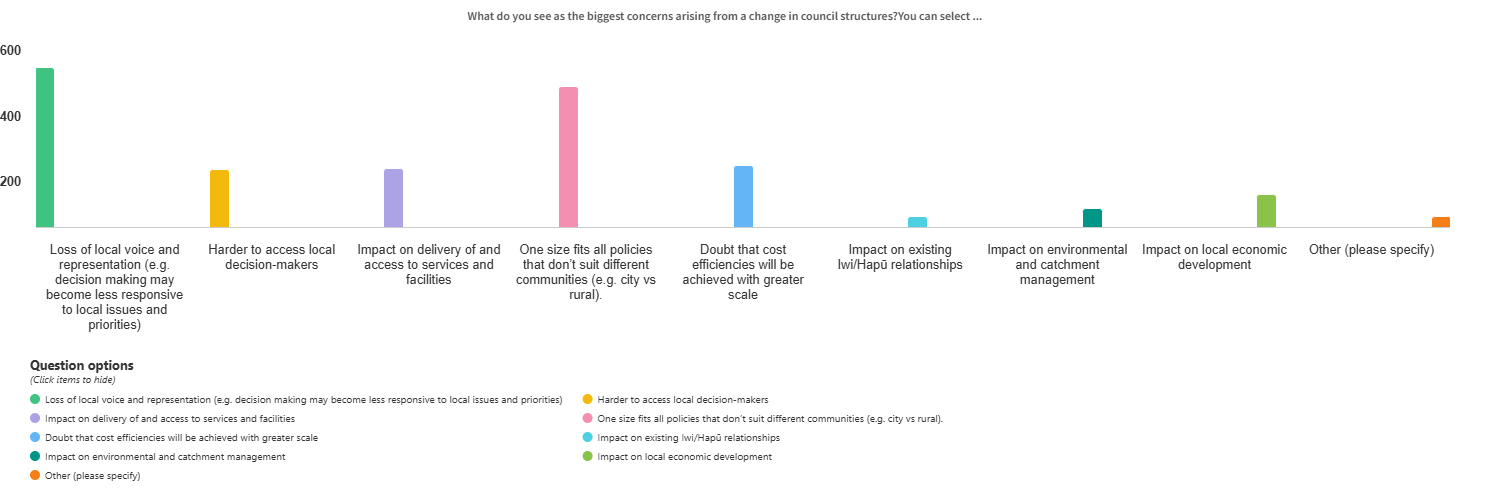
Biggest concerns?
- 76.8% selected loss of local voice and representation
- 67.5% selected one-size-fits-all policies
- 29.5% selected doubt that cost efficiencies will be achieved with greater scale
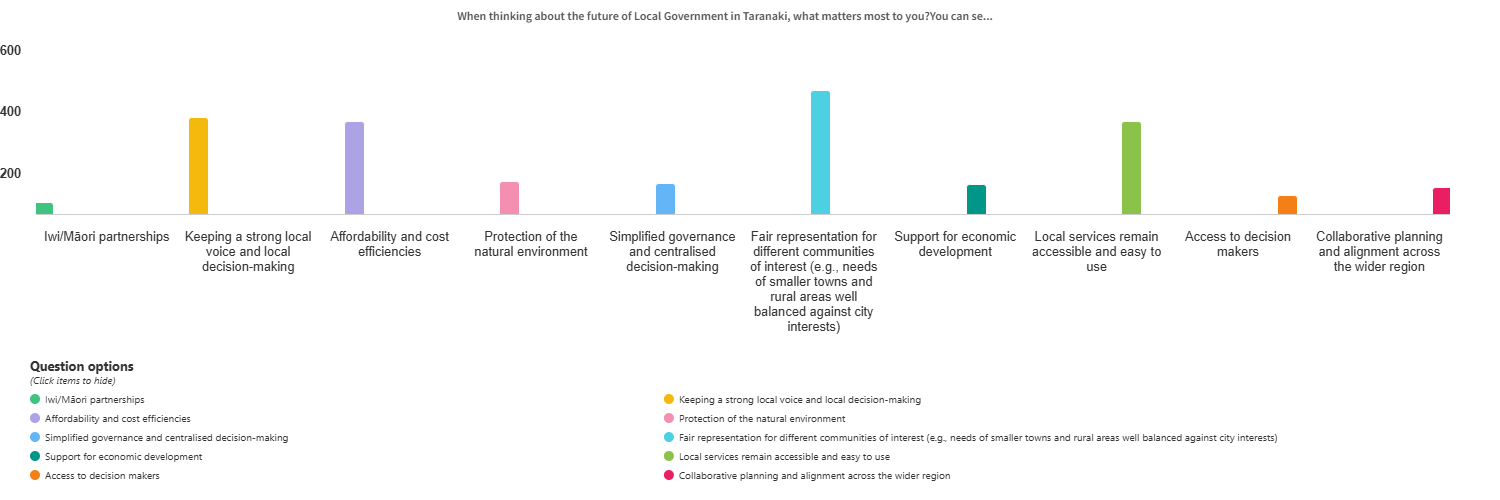
What matters most to people when thinking about the future of Local Government?
- 63.8% selected fair representation
- 49.8% selected keeping a strong local voice and local decision-making
- 47.9% selected affordability and cost efficiencies; and a close 47.8% selected local services remain accessible and easy to use
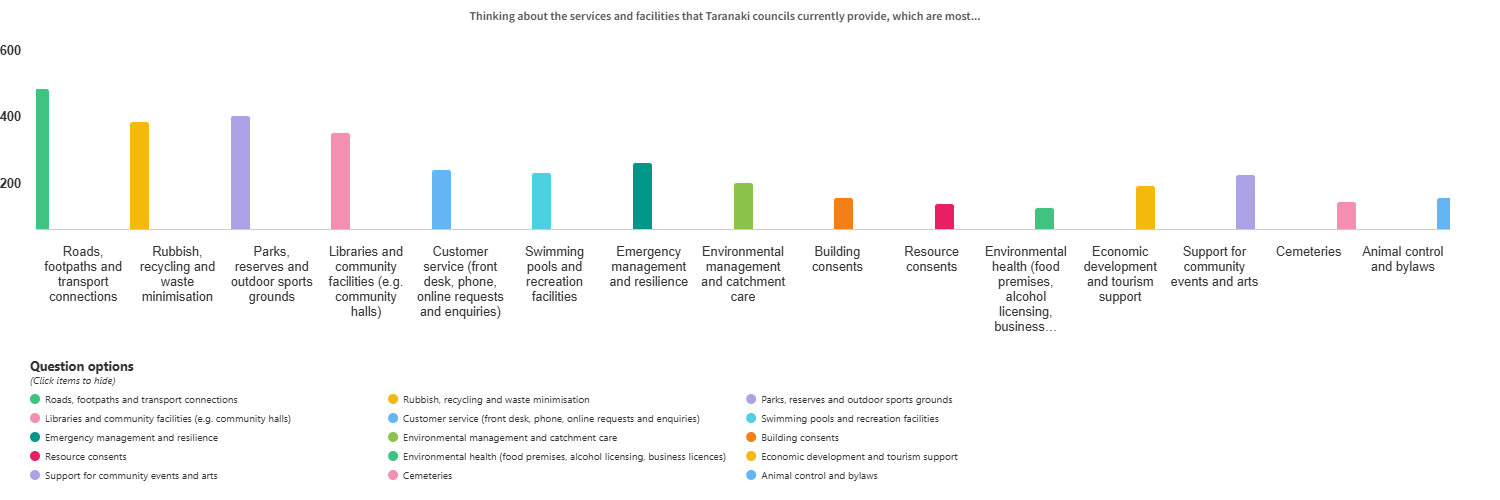
What council services and facilities matter most to people?
- 67.1% selected roads, footpaths and transport connections
- 54% selected Parks, reserves and outdoor sports grounds
- 51% selected Rubbish, recycling and waste minimisation
- 46.2% selected Libraries and community facilities
- 32% selected Emergency management and resilience
-
 SDC and STDC Outline Proposal - Submitted to the Government on 7 August 2026 (2.13 MB) (pdf)
-
Head Start pathway Simplifying Local Government (PDF via dia.govt.nz)
-
Agenda - Extraordinary Council Meeting (Approval of the Head Start Pathway Proposal) - August 2026
-
Agenda - Extraordinary Council Meeting - Head Start Pathway - July 2026
-
Agenda - Extraordinary Council Meeting - Government Head Start Process - May 2026
-
SDC Printable Community Survey (217 KB) (pdf)